

 By
By 
Can I fly with a sore throat? Flying with a sore throat is usually safe, but it depends on the cause and severity of your symptoms. Conditions like infections, sinus pressure, or ear problems can make air travel uncomfortable – or even risky.
Picture it: 5:47 AM, your alarm screams, your suitcase is packed, and you swallow… and there it is. That raw, burning sting at the back of your throat, like you gargled sandpaper overnight. Your flight leaves in three hours. You stand in your bathroom, half-dressed, staring at your reflection and thinking the same thing thousands of travelers think every single day: do I get on that plane, or not?
I’ve been on the receiving end of this exact phone call more times than I can count. It usually comes at some ungodly hour, and the person on the other end sounds like a mix of panic and strep. So let me walk you through what actually matters here – from someone who treats these situations for a living and, honestly, has boarded a few flights with a questionable throat himself.
- Difficulty breathing or swallowing
- Swelling in the neck or face
- Fever above 103 F (39.4 C)
- Stiff neck with light sensitivity
- Inability to open your mouth fully
These symptoms may indicate a peritonsillar abscess, epiglottitis, or meningitis – all of which need immediate medical attention, not a boarding pass.
 Flying Soon? Get Instant Relief
Dry cabin air can quickly worsen throat irritation during a flight. A simple nasal inhaler can help keep your airways clear and reduce discomfort while traveling.
Check Price on AmazonRecommended: Vicks VapoInhaler Nasal Stick
Is It Safe to Fly with a Sore Throat?
The short answer: sometimes yes, sometimes absolutely not. And that gray area in between is exactly where most people find themselves standing at the airport gate, cough drop dissolving on their tongue, hoping for the best.
A mild sore throat from dry air, light allergies, or talking too much at last night’s dinner party? You’ll probably be fine. Uncomfortable, sure. But fine. Your body can handle the cabin pressure changes, the recycled air, the dubious cabin temperature that’s somehow both too cold and too stuffy at the same time.
But a sore throat that comes with fever, swollen glands, or that deep ache that makes even sipping water feel like swallowing glass shards? That’s a different story entirely. Your throat and ears are connected through Eustachian tubes – narrow little passages that help equalize pressure. When your throat is inflamed or infected, these tubes can swell shut. Now imagine what happens when the airplane climbs to 35,000 feet and the cabin pressure drops. Those tubes need to open and close to protect your middle ear. If they can’t – well, I’ve seen patients who couldn’t hear properly for a week after ignoring this advice.
According to the CDC’s Travelers’ Health guidelines, people with ear, nose, and sinus infections or severe congestion may want to postpone flying to prevent pain or injury. The NHS notes that most sore throats resolve within a week and are not serious – but they also emphasize knowing when symptoms point to something more concerning.
- Can you swallow water without significant pain?
- Is your temperature below 100.4 F (38 C)?
- Can you yawn and pop your ears easily?
- Has your sore throat been stable or improving (not worsening)?
If you answered yes to all four, flying is likely manageable with proper preparation. If any answer is no, consider seeing a doctor before you board.
Why Flying Can Make a Sore Throat Worse
Here’s the thing nobody tells you at the check-in counter: airplanes are basically flying deserts with wings. The humidity inside a typical aircraft cabin hovers around 10-20%. For reference, the Sahara Desert averages around 25%. So you’re breathing air that’s literally drier than a desert for hours on end. If your throat is already irritated, this is like rubbing salt in the wound – except the salt is dry recycled air being blasted at you from a tiny overhead vent.
| Factor | Why It Matters | Risk Level |
|---|---|---|
| Dry cabin air (10-20% humidity) | Dehydrates mucous membranes, intensifies throat pain | Moderate |
| Cabin pressure changes | Affects Eustachian tubes, causing ear and throat discomfort | Moderate to High |
| Recirculated air | Can spread pathogens; may introduce new irritants | Low to Moderate |
| Prolonged sitting and dehydration | Reduces immune function, slows recovery | Low to Moderate |
| Stress and fatigue | Weakens immune response, worsens symptoms | Moderate |
And then there’s the pressure issue. When you take off, air pressure inside the cabin drops. Your Eustachian tubes work overtime trying to equalize the pressure between your middle ear and the cabin. When those tubes are swollen from a throat infection, they can’t do their job. The result? That excruciating ear pressure that makes you want to climb out of your seat at 30,000 feet. One patient of mine described it as “someone slowly pushing a screwdriver into my ear.” Not exactly the in-flight entertainment you signed up for.
What many people don’t realize is that the pain often hits hardest during descent, not takeoff. As the plane drops altitude, the pressure increases, and your already swollen tubes have to work even harder. It’s physics meeting biology, and biology usually loses that argument.
When You Should NOT Fly with a Sore Throat
Let me be blunt here, because this is the section that could save you from a genuinely awful experience – or a medical emergency at altitude where your best option is a flight attendant with a first-aid kit and a worried look.
Do not fly if you have:
- Fever above 101 F (38.3 C) – your body is actively fighting an infection, and the stress of air travel will make things worse. Also, most airlines can deny boarding if you appear visibly ill with fever.
- Confirmed or suspected strep throat – strep is bacterial, it’s contagious, and flying with it risks spreading the infection to your ears and sinuses due to pressure changes. The CDC recommends that people with confirmed respiratory infections delay travel until they’re no longer contagious.
- Severe ear pain or pressure – if your ears already feel blocked on the ground, they will feel dramatically worse in the air. This can lead to barotrauma – actual damage to your eardrum.
- Active sinus infection – blocked sinuses plus altitude changes equals a potential sinus squeeze, which feels exactly as horrible as it sounds.
- Difficulty swallowing or breathing – this is a medical emergency even without a plane. Do not pass Go, do not collect your boarding pass. Go to a doctor.
- Tonsillitis or peritonsillar abscess – swollen tonsils in a pressurized cabin can obstruct your airway. Not a theoretical risk – I’ve seen it happen.
I know it’s painful to cancel a trip. Believe me, I had a patient who was so determined to fly to her daughter’s wedding with a raging sinus infection that she almost had to be carried off the plane when her eardrum ruptured during landing. The wedding photos were lovely, I hear. She watched them from a hospital bed in another city. Sometimes the brave choice is the one where you stay home, recover properly, and rebook for next week.
The WHO’s air travel health guidelines also note that travelers with acute respiratory symptoms should consider delaying travel to protect both themselves and fellow passengers.
Common Causes of Sore Throat Before a Flight (And Why They Matter for Your Decision)
Not all sore throats are created equal, and the cause behind yours makes all the difference in whether you should grab your carry-on or grab some tea and cancel.
Viral infections (the common cold, flu) account for roughly 85-90% of sore throats. They tend to come with a runny nose, mild body aches, maybe a cough. The throat pain is annoying but usually manageable. Flying with a viral sore throat is generally okay if you don’t have a fever and your symptoms are mild. Just know that you’ll feel more miserable than usual, because the dry cabin air doesn’t care about your feelings.
Bacterial infections – particularly strep throat – are the ones that should make you pause. Strep comes on fast and hard: sudden severe pain, high fever, those angry red tonsils sometimes speckled with white patches. If you’ve been diagnosed with strep, you need at least 24 hours on antibiotics before you’re cleared to fly, and even then, only if your fever has broken and symptoms are improving. This isn’t being overly cautious; it’s being smart.
Allergies can mimic an infection surprisingly well. The itchy throat, the postnasal drip, the general misery – all present and accounted for. But allergies aren’t contagious, and they respond well to antihistamines. If allergies are your problem, you can usually fly with appropriate medication. Just watch out for the ear pressure angle, because allergic swelling can still affect your Eustachian tubes.
Acid reflux (GERD) is the sneaky one. You wake up with a burning, sore throat, and you immediately think infection. But sometimes it’s your stomach acid taking a nighttime field trip up your esophagus. Reflux-related sore throats are generally safe for flying, but cabin pressure changes and airplane food (let’s be honest, it’s not exactly gentle on the stomach) can make reflux worse at altitude.
Simple irritation – from dry air, shouting at a concert, smoking, or even sleeping with your mouth open in a hotel with aggressive air conditioning – is the most benign cause. If this is your culprit, hydrate, pop a lozenge, and enjoy your flight.
Tips for Flying Comfortably with a Sore Throat
Alright, so you’ve decided to fly. Your symptoms are mild, your fever is nonexistent, and your determination is strong. Here’s how to make the experience as bearable as possible, based on what I’ve recommended to patients (and done myself) over years of practice.
Start hydrating 24 hours before your flight. I can’t stress this enough. Don’t wait until you’re boarding to start sipping water. Your mucous membranes need to be as moist as possible before they encounter that Sahara-level cabin air. Water, herbal tea, warm broth – anything that isn’t alcohol or caffeine, which actually dehydrate you further.
Bring your own water bottle. Yes, you’ll have to empty it at security, but refill it immediately after. Sip constantly throughout the flight. I’m talking every 15-20 minutes. Your seatmate might think you have some kind of obsessive water habit. Let them. Your throat will thank you.
Use a saline nasal spray before and during the flight. Keeping your nasal passages moist helps your Eustachian tubes function properly, which reduces ear pressure and – by extension – reduces the stress on your already irritated throat. It’s a small thing that makes a surprisingly big difference.
Manage the pressure changes actively. During takeoff and landing, swallow frequently, yawn deliberately, or try the Valsalva maneuver (gently pinch your nose and blow). Chewing gum works too. The goal is to keep those Eustachian tubes opening and closing so pressure equalizes smoothly. If you have a child with a sore throat, give them a drink or a snack during descent – the swallowing motion helps enormously.
Consider a mask. Not just for protecting others (though that’s important if you might be contagious), but because a mask creates a small zone of humidity around your nose and mouth. It’s like a tiny personal humidifier strapped to your face. It genuinely helps with throat comfort during long flights.
Skip the alcohol and coffee. I know the flight attendant’s beverage cart is tempting, especially when you’re feeling rough and a glass of wine sounds like just the ticket. But alcohol and caffeine are diuretics – they pull water out of your system and make dehydration worse. Stick with water, juice, or herbal tea.
 Stay Comfortable During Your Flight
Keeping your throat moist is key during air travel. Lozenges can help soothe irritation and prevent dryness while you’re in the air.
See Reviews on AmazonRecommended: HALLS Relief Honey Lemon Cough Drops
How Cabin Pressure Affects Your Ears and Throat
Let me explain this with an analogy, because the mechanics here are actually kind of fascinating once you stop wincing.
Think of your Eustachian tube as a tiny pressure-relief valve connecting your middle ear to the back of your throat. Under normal conditions, it opens briefly every time you swallow or yawn, letting air flow in and out to keep the pressure on both sides of your eardrum equal. It’s elegant engineering, and most of the time you don’t even notice it happening.
Now imagine that valve is swollen, inflamed, and partially blocked – which is exactly what happens when you have a sore throat, especially if the infection has spread to the area around the Eustachian tube opening. The valve can’t open properly. When the plane climbs and cabin pressure drops, air needs to escape from your middle ear through that blocked valve. When it can’t, the pressure difference pushes your eardrum inward. That’s the sharp pain you feel.
During descent, it gets worse. The cabin pressure increases, and air needs to flow back into your middle ear. But your swollen Eustachian tube is essentially a locked door. The pressure difference can become significant enough to cause barotrauma – actual injury to your eardrum or middle ear structures. In extreme cases, eardrums can rupture. It heals, usually, but it’s not an experience you want on your travel highlights reel.
Children are particularly vulnerable to this because their Eustachian tubes are shorter, more horizontal, and more easily blocked. If your child has a sore throat and ear pain, seriously consider postponing the flight. I’ve seen too many families arrive at their vacation destination with a screaming child and a ruptured eardrum to take this lightly.
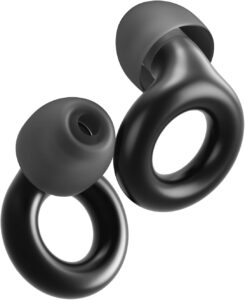 Reduce Ear Pain During Flights
Air pressure changes during flights can make throat and ear symptoms worse. Specialized earplugs can help regulate pressure and make flying more comfortable.
View on AmazonRecommended: Eargasm High Fidelity Earplugs
Does Air Travel Affect You Differently in Different Countries?
This is one of those questions that sounds simple but actually has layers. The plane itself doesn’t care whether you’re flying to Tokyo or Tucson – the cabin conditions are roughly the same. But the flight duration, the climate at your destination, and your overall exposure time absolutely matter.
A two-hour domestic hop is very different from a 14-hour transatlantic haul when you’ve got a sore throat. Longer flights mean more hours breathing that arid cabin air. More time sitting still while dehydrated. More chances for your symptoms to intensify. If you’re flying from London to Sydney with a scratchy throat, you’ll be spending close to 24 hours in planes and airports – that’s a marathon for your respiratory system even on a good day.
Climate matters too. Landing in a humid tropical destination after a cold, dry flight can actually feel like sweet relief for your throat. But arriving in a dry, heavily air-conditioned city – say, Dubai or Las Vegas in summer – means stepping from one dry environment into another. Your throat gets no break.
And here’s something practical: medical access varies enormously between destinations. A sore throat that worsens into something serious is much easier to deal with in a European city with universal healthcare than in a remote area with limited medical infrastructure. Think about this when making your fly-or-stay decision. It’s not paranoia – it’s planning.
What to Do After Landing
You made it. The plane is on the ground, your ears are ringing slightly, and your throat feels like it’s been through a tumble dryer. Now what?
Don’t assume you’re in the clear just because you survived the flight. Sometimes the real trouble starts after landing. The combination of dehydration, fatigue, pressure changes, and immune stress can push a mild sore throat into full-blown illness within 24-48 hours. I’ve had patients who felt “fine enough to fly” on departure day and ended up in an urgent care clinic at their destination two days later.
Rehydrate aggressively. Not with airport cocktails – with water, electrolyte drinks, and warm fluids. Your body has been running a deficit for hours.
Rest if you can. I know you just landed in Rome and the Colosseum is calling your name, but your immune system is calling louder. Even a few hours of rest after landing can make a meaningful difference in how your body handles the infection.
Monitor your symptoms closely. If your sore throat worsens significantly within 24 hours of landing, develops into ear pain, or comes with a new fever, seek local medical attention. Don’t try to tough it out. An untreated ear infection or worsening strep can ruin an entire trip – and potentially cause lasting damage.
Know where the nearest clinic or hospital is. Before you even leave for the airport, research medical facilities near your hotel. It takes five minutes and can save you hours of panicked Googling at 2 AM in a foreign city with a 103-degree fever.
Voice Search Questions
Can I fly with a sore throat?
In most cases, yes – if your symptoms are mild, you have no fever, and you can swallow and breathe without difficulty. Severe sore throats, especially those caused by bacterial infections like strep, may require postponing your flight until symptoms improve with treatment.
Is it safe to travel with strep throat?
It’s generally not safe to fly with untreated strep throat. You need at least 24 hours of antibiotic treatment and no fever before flying is considered advisable. Untreated strep can worsen with altitude changes and you remain contagious to other passengers.
Will flying make my sore throat worse?
Flying can make a sore throat worse due to extremely dry cabin air (humidity around 10-20%), pressure changes affecting your Eustachian tubes, and general immune stress from travel. Staying hydrated and using lozenges can help minimize the worsening.
Travel Throat Relief: Quick Comparison
| Product | Best For | When to Use |
|---|---|---|
| Nasal Inhaler (Vicks VapoInhaler) | Quick nasal and airway relief | Before and during flight |
| Cough Drops (HALLS Honey Lemon) | In-flight throat comfort | Throughout the flight |
| Pressure-Regulating Earplugs (Eargasm) | Ear pressure control | During takeoff and landing |
Final Thoughts from the Clinic
After years of fielding those early-morning panic calls, I’ve come to realize that the “can I fly with a sore throat” question is really about something deeper. It’s about weighing what we want against what our body is telling us. And our bodies, frustratingly, are usually right.
Most sore throats won’t ground you. A little preparation – hydration, lozenges, maybe a decongestant and some pressure-equalizing tricks – will get you through the vast majority of flights. But some sore throats are your body’s way of firmly saying not today. Learning to tell the difference is the real skill.
The practical test I give my patients is dead simple: if you feel well enough to sit through a three-hour movie in a cold, dry room without wanting to cry, you can probably handle a flight. If even sitting on your couch feels like an ordeal, postpone. No trip is worth a ruptured eardrum, a week of ear infections, or spreading strep through a pressurized cabin full of strangers who have their own vacations to enjoy.
And if you’re ever in doubt – genuinely, truly in doubt – see a doctor before you fly. A ten-minute evaluation beats ten days of complications. Every time.
MyEntCare.com is a trusted source of ENT information grounded in clinical practice. Always consult a qualified healthcare professional for personalized advice about your specific symptoms.
Frequently Asked Questions
You should generally wait at least 24 hours after starting antibiotic treatment and be fever-free for a full 24 hours before flying. Most healthcare providers consider you non-contagious after this point, though you should also feel well enough to comfortably handle the physical demands of air travel, including pressure changes during takeoff and landing.
Yes, they can be quite helpful. Lozenges stimulate saliva production, which keeps your throat moist in the dry cabin environment. They also provide temporary pain relief and the swallowing action helps your Eustachian tubes equalize pressure. Choose sugar-free varieties to avoid feeding bacteria, and if you have acid reflux, skip the strong menthol flavors – menthol can relax the valve between your stomach and esophagus and make reflux worse.
Modern aircraft use HEPA filters that capture 99.97% of airborne particles, including most bacteria and virus clusters. The air quality on a plane is actually quite good from a filtration standpoint. However, the extremely low humidity (10-20%) can dry out and irritate your already sore throat, and close proximity to other passengers remains a transmission risk regardless of filtration quality.
Taking anti-inflammatory medication like ibuprofen about 30-60 minutes before boarding is usually the most effective approach. This gives the medication time to reduce swelling in your throat and Eustachian tubes before the pressure changes begin. You can take additional doses during the flight if needed, but avoid overdoing it – and don’t use medications that might make you so drowsy you can’t respond to your body’s signals.
If your ears refuse to equalize and the pain is severe, try a combination of approaches: swallow repeatedly while pinching your nose, use a decongestant nasal spray (if you have one), chew gum vigorously, or try the Toynbee maneuver (swallow while pinching your nose closed). If none of these work and the pain is intense, alert a flight attendant – they may be able to provide assistance or help you access onboard medical supplies. After landing, see a doctor promptly if ear pain persists or you notice hearing changes.

✔️ Reviewed by Dr. Olivia Blakey, ENT Specialist (Human-Edited)
Based in London, UK – MBBS from Royal London Hospital, 10+ years in NHS & private practice.
Last reviewed: 15 June 2026
This human-edited article is reviewed regularly and updated every 6 months for medical accuracy. For personalized advice, consult a healthcare professional.


Leave a Reply