

 By
By 
Ear pain children causes aren’t always what they look like – and that’s exactly the problem. Your kid is screaming at 11 PM, grabbing their ear, and your first instinct is “ear infection, antibiotics, done.” But here’s the inconvenient truth: in roughly half of childhood ear pain cases that walk through an ENT’s door, there’s no active infection at all. Something else entirely is going on. And missing that something else? That’s where things get interesting – or frustrating, depending on your sleep schedule.
A few months back, a mum came in with her four-year-old son, Joshua. Three doctor visits in two weeks, two courses of antibiotics, zero improvement. The boy kept pulling at his left ear. Wouldn’t sleep. The pediatrician had seen a slightly red eardrum and, understandably, treated for infection. Twice. Nothing changed. When I examined him, the ear looked irritated – but from the outside, not within. Cause? A piece of dried playdough packed so neatly into the canal that the first two doctors had simply missed it in dim light. We fished it out in forty seconds. He stopped crying almost immediately. His mum cried anyway – relief will do that to you.
That’s the thing about ear pain in children. It’s a symptom, not a diagnosis. And treating the symptom without finding the cause is a bit like rebooting your laptop every day without ever realising there’s malware on it.
Why Your Child Has Ear Pain Without Infection
Kids’ ears are anatomically vulnerable in ways adults’ aren’t. Their Eustachian tubes – the tiny passages connecting the middle ear to the back of the throat – run almost horizontally, like a garden hose lying flat on the ground. In adults, they angle downward, which helps fluid drain naturally. In children, fluid pools. Pressure builds. Pain follows. And that’s before we even factor in everything else that can go wrong in a small head that spends its days touching communal toys, putting things in orifices, and occasionally falling off playground equipment. Beyond anatomy, children are notoriously poor at localizing pain. A toddler feeling discomfort in their jaw will point to their ear. A child with inflamed tonsils might insist it’s their ear that hurts. Nerves in the head and neck are interconnected in frustratingly confusing ways – the glossopharyngeal nerve, for instance, sends branches both to the throat and to the ear. So when the throat is inflamed, the ear gets the memo too, whether you like it or not. The result? A child who genuinely, truthfully feels ear pain – but whose ear is structurally fine.Not sure if what you’re seeing is serious or just one of those annoying-but-harmless childhood things? Keep reading – because the distinction genuinely matters, and the answer might surprise you.
Common Causes of Ear Pain in Kids (Not an Infection)
Teething
Here’s one that confuses almost every new parent. When babies and toddlers are cutting teeth – especially those back molars, which erupt between 12 and 30 months – the pain can radiate straight to the ear. This happens because the nerve supplying the lower teeth (the inferior alveolar branch of the trigeminal nerve, if you want the full name) shares real estate with nerves servicing the ear region. So the brain receives pain signals and, frankly, doesn’t always know which postcode they came from. Your baby isn’t faking it. Their ear might feel genuinely awful even though every problem is in the gums. Look for: increased drooling, chewing on hands or toys, swollen gum ridges, and general misery that seems tooth-timed.Sinus Infections and Congestion
When sinus cavities fill with fluid – whether from a cold, allergies, or a full-blown sinusitis – the pressure can radiate in all directions, including toward the ears. The Eustachian tubes often get caught in the crossfire: swollen, blocked, and unable to equalize pressure properly. The resulting sensation can feel identical to an ear infection from the inside. Add a bit of muffled hearing from the congestion, and parents are completely convinced the ear is the problem. It isn’t, quite. The sinuses are the villain here. Treating the congestion typically resolves the ear discomfort without any ear-specific intervention at all.Allergies
Seasonal allergies and food sensitivities can cause the same Eustachian tube dysfunction described above, but in a more chronic, grinding sort of way. A child who seems to “always have ear problems” – particularly in spring or autumn – might be dealing with allergic inflammation of the nasal passages that’s backing up into the ear system. The ears feel full, uncomfortable, occasionally painful. It’s not dramatic, but it’s persistent. And because it’s not a sharp shooting pain, it can go unnoticed – until your kid mentions, almost as an afterthought, that their ear has felt weird for three weeks.Jaw Problems (TMJ)
Temporomandibular joint dysfunction sounds like something you’d only find in stressed-out adults grinding their teeth over mortgage payments. Not so. Kids can develop TMJ issues too – especially those who clench during sleep, have had dental work recently, or carry anxiety in their jaw. The joint sits remarkably close to the ear canal, and when it misbehaves, the referred pain lands squarely in the ear. A child might describe it as a dull ache that’s worse in the morning or after chewing. They’ll often have no idea their jaw is involved. Ask them to open their mouth wide and see if it causes discomfort. Sometimes that’s all the clue you need.Earwax Blockage
Earwax gets a bad reputation, but it’s actually useful – it cleans, lubricates, and protects the ear canal from bacteria. Problems arise when it accumulates faster than it exits, forming a blockage. This creates pressure, a plugged sensation, and sometimes real pain. It’s particularly common in kids who use cotton swabs (which push wax deeper, not out – please stop doing this), or who have naturally narrow ear canals. The muffled hearing that accompanies a wax blockage often gets misinterpreted as a sign of infection. It isn’t. It’s just a plumbing issue.
Earache Relief Drops for Kids (Ages 2+)
When a child’s ear aches from a cold, allergies, or mild irritation — and it’s clearly not a foreign object situation — many parents keep earache drops on hand for faster comfort. Look for formulas with lidocaine (numbing) or natural herbal blends like mullein and garlic oil. Hyland’s and Eosera are the two most recommended brands by pediatric ENTs for home use. Always check the age minimum on the label before use.
See Options on Amazon ›
* As an Amazon Associate, MyENTCare may earn from qualifying purchases. Always consult your doctor before using ear drops in children.
Referred Pain from Throat Issues
Tonsillitis, strep throat, and pharyngitis all cause referred ear pain via the same shared nerve pathways mentioned earlier. A child who’s got swollen, angry tonsils might point exclusively to their ear and swear their throat feels fine. Kids are not great historians of their own symptoms – they report where it hurts most, not where it started. This is why, in any ear pain assessment that doesn’t have an obvious cause, a good clinician will always, always look at the throat too.How to Tell If It’s Not an Ear Infection
This is where it helps to stop guessing and start comparing symptoms. The table below is designed to give you a fast, practical overview – think of it as a starting point, not a final diagnosis. If anything is unclear, err on the side of getting checked.| Cause | Key Symptoms | Infection? | What Usually Helps |
|---|---|---|---|
| Teething | Gum swelling, drooling, biting objects, fussiness timed with new teeth | No | Teething rings, appropriate pain relief, cold washcloth |
| Sinus congestion / sinusitis | Stuffy nose, facial pressure, nasal discharge, worse when bending forward | No | Saline rinse, fluids, steam, decongestant if age-appropriate |
| Allergies | Seasonal pattern, itchy eyes, runny nose, “full” ear sensation | No | Antihistamine, allergy management, ENT referral if chronic |
| Earwax blockage | Muffled hearing, itching, fullness, no fever or discharge | No | Gentle ear drops, professional removal – no cotton swabs |
| TMJ / jaw tension | Jaw clicking, worse in morning, pain on chewing or yawning | No | Soft diet, jaw rest, dental assessment |
| Referred pain (throat) | Sore throat, swollen glands, difficulty swallowing, no visible ear problem | No | Treat underlying throat issue, pain management |
| Foreign object | Sudden onset, one-sided pain, child was unattended, sometimes smell | Possibly | Don’t probe – see doctor immediately for safe removal |
| Ear infection (otitis media) | Fever, tugging ear, discharge, worsens lying down, recent cold | Yes | Doctor assessment, possible antibiotics depending on severity |
📍 Pain Location Map – Where It Hurts vs. Where the Problem Is
Front of ear / jaw area
Likely TMJ or dental pain radiating upward. Worse when chewing.
Behind the ear / mastoid
Lymph nodes, or in serious cases, mastoiditis. Needs prompt assessment.
Deep inside ear
Could be middle ear infection, wax blockage, or pressure from congestion.
Ear + throat together
Classic referred pain. Check tonsils and throat first.
Still not sure which category fits your child? The next section covers what you can safely do at home – and exactly when the home-treatment window closes and you need a professional in the room.
What You Can Do at Home
Let me be upfront: home management is for mild, short-duration ear pain with no fever, no discharge, no hearing change. If any of those three things are present, skip this section and scroll down to “when to see a doctor.” For everything else, here’s what actually helps. Pain relief first. Age-appropriate ibuprofen or acetaminophen (paracetamol) is your friend. It won’t fix the cause, but it makes the next few hours survivable – for your child and honestly for you too. Follow the dosing instructions precisely; guessing weight-based doses at midnight is an Olympic-level stress event. Warmth works. A warm compress – not hot, not even close to hot, just comfortably warm – held against the outside of the ear can ease discomfort noticeably. The heat relaxes the muscles around the ear and reduces the sensation of pressure. Some parents do this instinctively. Some don’t know it’s an option. Now you do.
Warm Compress / Microwavable Heating Pad
This simple trick works surprisingly well for ear pressure and mild pain. A soft, microwavable pad held gently against the ear for 10-15 minutes can reduce discomfort quickly – without any medication at all. Many parents keep one in the medicine cabinet specifically for this.
See Options on Amazon ›
* As an Amazon Associate, MyENTCare may earn from qualifying purchases.
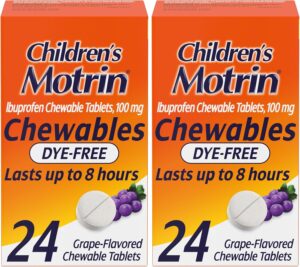
Children’s Pain Reliever (Ibuprofen / Acetaminophen)
For quick relief during a painful night, many parents rely on a weight-appropriate children’s ibuprofen or acetaminophen. Keep the correct dose chart handy – most pediatric formulas include one. Never give aspirin to children under 16.
See Options on Amazon ›
* As an Amazon Associate, MyENTCare may earn from qualifying purchases. Consult your doctor before giving any medication.
When to See a Doctor
Most mild ear pain resolves within 24-48 hours with comfort measures. That’s the reassuring news. The less reassuring news is that some situations need prompt attention, and knowing which is which could genuinely matter.
⚠️ See a doctor promptly if your child has:
- Fever above 38.5°C / 101.3°F alongside ear pain
- Visible discharge from the ear canal (yellow, green, or bloody)
- Swelling, redness, or tenderness behind the ear (over the mastoid bone)
- Sudden or worsening hearing loss
- Ear pain that has lasted more than 48-72 hours without improvement
- Any age under 6 months with any ear symptom at all
- Loss of balance, dizziness, or walking unsteadily
- Suspected foreign object in the ear
- Severe pain that doesn’t respond to appropriate pain relief
| Symptom / Situation | Recommended Action | Urgency |
|---|---|---|
| Mild pain, no fever, improving within 24h | Monitor at home, comfort measures | Low |
| Pain persisting beyond 48-72 hours | Schedule GP or ENT appointment | Moderate |
| Fever above 38.5°C with ear pain | Call doctor same day | Moderate-High |
| Ear discharge (any colour) | See doctor today | High |
| Swelling behind the ear | Urgent – same-day assessment | Urgent |
| Hearing loss, dizziness, or balance issues | Urgent ENT or emergency care | Urgent |
| Child under 6 months with any ear symptom | See doctor without delay | Urgent |

Digital Ear Thermometer for Kids
If your child has a fever alongside ear pain, checking the exact temperature matters – because 38.2°C and 39.5°C are very different clinical situations. A reliable ear thermometer gives you an accurate reading in seconds, which is genuinely useful at 3 AM when you’re deciding whether to call the out-of-hours line.
See Options on Amazon ›
* As an Amazon Associate, MyENTCare may earn from qualifying purchases.
Why Doctors Sometimes Say “No Infection” (And What That Actually Means)
This confuses a lot of parents – understandably. Your child is clearly in pain. The doctor examines the ear, says it looks fine, and sends you home with nothing but a “keep an eye on it.” It can feel dismissive. It isn’t, usually. Here’s what “no infection” actually means in clinical terms. It means the eardrum isn’t bulging with fluid pressure. It means there’s no visible bacterial infection in the middle ear space. But it doesn’t mean the pain is imaginary. Pain can originate entirely outside the ear – from teeth, jaw, throat, lymph nodes, sinus cavities – and register in the ear because that’s how referred pain works. A doctor who tells you “no infection” is giving you useful information, not a brush-off. The next question to ask is: “So what do you think IS causing it?” Good clinicians will then do exactly what should happen: look at the throat, feel the jaw joint, check for lymph node swelling, ask about recent dental changes or allergy symptoms. If yours doesn’t, it’s entirely reasonable to prompt that conversation. You’re not being difficult. You’re advocating for your child. That’s the job.When Ear Pain Keeps Coming Back
Recurring ear pain – more than four episodes in six months, or six in a year – is a different conversation altogether. This is where we start thinking about structural solutions rather than repeating the same treatment cycle and hoping for different results. Ear tubes (grommets), tiny ventilation tubes inserted through the eardrum under brief anaesthesia, can be genuinely transformative for children who’ve spent their first years of life in chronic fluid-related discomfort. The procedure takes about ten minutes. Kids typically go home the same day. For many families, it’s the single thing that changes everything – sleep, mood, speech development, everything. Speech development is worth flagging separately. Fluid behind the eardrums muffles sound – imagine learning to talk while listening through a swimming pool. Children in that environment may develop speech delays that look mysterious until someone checks their hearing properly. If your three or four-year-old isn’t speaking clearly or seems to ignore instructions, a hearing assessment should be on the list. It’s not an overreaction. It’s the right call.
If your child’s ear pain keeps coming back, isn’t improving, or you’re getting conflicting answers from different doctors – an ENT specialist can usually clarify things in a single appointment.
Learn More About ENT Assessment ›
Conclusion
Ear pain in children is genuinely complicated – more complicated than the “probably an infection, here are antibiotics” narrative suggests. Teething, sinus pressure, allergies, jaw tension, referred pain from the throat, earwax, foreign objects – all of these cause ear pain. None of them involve infection. And treating infection when there isn’t one doesn’t help. It just adds antibiotic exposure to a situation that didn’t need it. Your role isn’t to diagnose your child – it’s to observe, to recognize the red flags, and to know when comfort measures at home are sufficient versus when a clinician needs to be involved. You’ll get it wrong sometimes. Everyone does. The goal isn’t perfection; it’s informed decision-making at 2 AM when you’re running on three hours of sleep and your child is still crying. Having a framework for what you’re seeing makes that moment slightly less awful. If in doubt, get them checked. A five-minute ear examination doesn’t cost much in time or worry, and the alternative – missing something that needed early attention – costs considerably more.Frequently Asked Questions

✔️ Reviewed by Dr. Olivia Blakey, ENT Specialist (Human-Edited)
Based in London, UK – MBBS from Royal London Hospital, 10+ years in NHS & private practice.
Last reviewed: 19 September 2026
This human-edited article is reviewed regularly and updated every 6 months for medical accuracy. For personalized advice, consult a healthcare professional.


Leave a Reply