

 By
By 
If you snore every night, you are almost certainly not the first person in your household to notice – but you are probably the last. That is one of the oddly cruel realities of snoring: the person generating all that noise is the only one sleeping through it. Everyone else is lying awake staring at the ceiling at 2 AM, debating whether it is worse to nudge the snorer or just accept their fate.
I have been working in ENT for over a decade, and I can tell you – nightly snoring is one of the most common reasons people end up in my office. Sometimes it really is nothing to worry about. But sometimes – and this is the part I want you to pay attention to – it is your body quietly waving a red flag that keeps getting ignored.
 💡 Quick Fix: Breathe Better Tonight
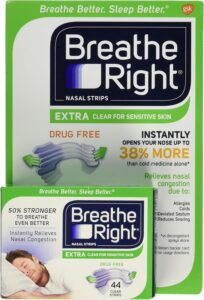
If your snoring is triggered by nasal blockage or congestion, simple nasal strips can open your airways and improve airflow while you sleep – no prescription needed.
Check Breathe Right on Amazon
Warning Signs That Snoring Is Dangerous
Before we talk about causes and explanations, I want to flip the usual order and start with the stuff that actually matters most. Because if any of these apply to you – or to someone you share a bed with – the rest of this article becomes considerably more urgent.
- Witnessed pauses in breathing during sleep (even brief ones)
- Gasping, choking, or snorting sounds that wake the person up
- Excessive daytime sleepiness – falling asleep during conversations, meals, or driving
- Morning headaches that appear regularly without obvious cause
- Waking up with a dry mouth or sore throat most days
- Mood changes, irritability, or memory problems that have crept up gradually
- Restless, unrefreshing sleep despite spending a full night in bed
The more of these you recognize, the more this deserves a proper conversation with a doctor. Not next month. Reasonably soon.
| Symptom | What It May Indicate | Urgency |
|---|---|---|
| Breathing pauses during sleep | Obstructive sleep apnea | High – see doctor soon |
| Gasping or choking at night | Airway obstruction | High |
| Severe daytime sleepiness | Poor sleep quality / apnea | Medium-High |
| Morning headaches | Overnight oxygen dip | Medium |
| Loud but steady snoring, no other symptoms | Simple snoring | Low – worth monitoring |
Is Snoring Every Night Normal?
Here is where it gets a bit complicated. Occasional snoring – after a long flight, a glass of wine too many, or during a bad cold – is genuinely common and not a cause for concern. Roughly 40% of adult men and 24% of adult women snore regularly. So in one sense, yes, it is very common.
But “common” and “normal” are not the same thing. Chronic nightly snoring – especially when it is loud, irregular, or accompanied by any of the warning signs above – is not something the body just does for no reason. There is always a structural or physiological explanation. The question is how serious that explanation turns out to be.
Think of it this way: lots of people get headaches. Most are harmless. But you still would not want to ignore one that shows up every single morning without fail. Nightly snoring deserves the same logic.
Why You Snore Every Night: The Main Causes
Snoring happens when air cannot move freely through your nose and throat during sleep. As muscles relax and tissues soften, the airway narrows – and that rushing air makes the surrounding tissues vibrate. The result is that distinctive rumble, wheeze, or roar that your family has probably complained about for years.
But the reason your airway narrows in the first place varies quite a bit from person to person. And knowing the cause actually matters, because different causes respond to different solutions.
| Cause | What Is Happening |
|---|---|
| Nasal congestion or allergies | Blocked nasal passages force mouth breathing, which increases vibration |
| Deviated nasal septum | A structural bend in the septum restricts one or both nostrils |
| Excess body weight | Fatty tissue around the neck compresses and narrows the airway |
| Alcohol or sedative use before bed | These relax throat muscles more than usual, increasing collapse risk |
| Sleeping on your back | The tongue falls backward, partially blocking the airway |
| Enlarged tonsils or adenoids | Extra tissue physically narrows the throat (especially common in children) |
| Age-related muscle tone loss | Throat muscles weaken with age and collapse more easily during sleep |
A few of these – particularly the structural ones like a deviated septum or enlarged tonsils – will not improve with lifestyle changes alone. Which is worth knowing before spending months trying every pillow-sprinkle-and-sleep-position trick the internet has to offer.
 💡 Fix the Root Cause of Snoring
If narrow nasal passages are behind your nightly snoring, a nasal dilator works from the inside to gently widen airflow – a step up from strips for people with chronic congestion or a mild septal issue.
See Mute Nasal Dilator on AmazonSnoring and Sleep Apnea: What Is the Connection?
Not everyone who snores has sleep apnea. That is genuinely true, and I do not want to send people into a panic. But here is the other half of that sentence that often gets left out: the vast majority of people with obstructive sleep apnea do snore – loudly, consistently, and with that characteristic pattern of abrupt silence followed by a gasp or snort.
Obstructive sleep apnea (OSA) is a condition where the airway does not just narrow during sleep but collapses completely, sometimes for 10, 20, or even 30 seconds at a stretch. This can happen dozens – or in severe cases, hundreds – of times per night. Each time it happens, the brain briefly wakes the body just enough to restart breathing. Not enough to fully wake up, but enough to completely fragment sleep architecture.
The result is that someone can spend eight hours in bed and still wake up exhausted, because they never actually reached the deep, restorative sleep stages their body needs. They feel like they have been through a car wash without the car.
Regular loud snoring – particularly with uneven rhythm, pausing, and gasping – is one of the most consistent early indicators of obstructive sleep apnea.
The tricky part is that people with sleep apnea often have no memory of waking up repeatedly. From their perspective, they slept fine. It is usually the partner, or the sheer weight of daytime exhaustion, that eventually prompts a visit to the doctor.
Health Risks of Nightly Snoring
This is probably the part most people skim past – which is a shame, because it is where the real stakes become clear. Chronic nightly snoring that masks untreated sleep apnea is not just an inconvenience. It has measurable, documented effects on some of the most important systems in the body.
| Health Risk | Why It Happens |
|---|---|
| Daytime fatigue and cognitive impairment | Fragmented sleep deprives the brain of restorative deep-sleep stages |
| High blood pressure (hypertension) | Repeated oxygen drops trigger stress responses that elevate blood pressure overnight |
| Heart disease and arrhythmia | Chronic oxygen fluctuations stress the cardiovascular system over time |
| Type 2 diabetes risk | Poor sleep disrupts insulin sensitivity and metabolic hormone regulation |
| Stroke risk | OSA is an independent risk factor for ischemic stroke, especially in middle-aged adults |
| Depression and anxiety | Chronic sleep deprivation alters mood-regulating neurotransmitter balance |
What strikes me most in clinical practice is how many of these effects are subtle and slow-moving – which makes them easy to rationalize away. Your blood pressure edges up, you blame work stress. Your concentration slips, you blame your phone. And Your mood darkens, you blame the season. Meanwhile, the actual culprit is happening at 3 AM when everyone else is asleep.
When Should You See a Doctor About Snoring?
Honestly, if you have read this far and you are asking yourself this question – that is probably already a sign. But to be more specific:
| Situation | Recommended Action |
|---|---|
| Snoring every night, loud, but no other symptoms | Mention at next routine checkup; monitor for new symptoms |
| Snoring with noticeable breathing pauses | Schedule appointment soon – sleep study may be needed |
| Snoring with severe daytime sleepiness | Do not delay – this combination warrants prompt evaluation |
| Snoring with morning headaches most days | Worth investigating – possible oxygen desaturation overnight |
| Snoring that has worsened significantly in recent months | See a doctor – progressive change often signals a developing issue |
| Child snoring regularly with restless sleep or behavioral changes | Pediatric ENT referral – tonsils and adenoids should be assessed |
A sleep study – either at home or in a specialist clinic – is often the next step, and it is far less dramatic than it sounds. Home sleep apnea tests are now accurate, simple to use, and you can do one in your own bed. The data they produce can either put your mind at rest or open the door to treatment that genuinely changes how you feel every day.
How to Stop Snoring: From Simple Fixes to Medical Treatment
The good news is that snoring – and even sleep apnea – is very treatable. The not-so-great news is that there is no single fix that works for everyone, because the cause varies so much. Here is a realistic overview of what actually works and for whom.
Lifestyle Changes (Often Underestimated)
- Weight loss – Even a modest reduction (5-10% of body weight) can meaningfully reduce snoring in people where excess neck tissue is contributing to airway narrowing.
- Sleeping on your side – Positional snoring responds well to this. There are dedicated pillows and even wearable devices designed to discourage back-sleeping.
- Reducing alcohol and sedatives before bed – These relax throat muscles beyond their usual resting state. Cutting out that nightcap can make a noticeable difference within days.
- Treating nasal congestion – Nasal rinses, antihistamines for allergies, or a nasal decongestant spray can open up airflow and reduce snoring severity.
Medical and Device-Based Options
- Nasal strips and dilators – Effective for snoring caused by nasal congestion or narrow nasal passages. Not a substitute for medical evaluation if sleep apnea is suspected.
- Mandibular advancement devices (MADs) – Custom-fitted mouthguards that reposition the jaw to keep the airway open. Well-supported evidence, good tolerance, especially for mild-to-moderate sleep apnea.
- CPAP therapy – Continuous Positive Airway Pressure is still the most effective treatment for moderate-to-severe obstructive sleep apnea. Modern machines are quieter and more comfortable than older generations. The first few weeks can feel awkward; most people who persist past that point find it transformative.
- Surgical options – For specific structural issues (deviated septum, enlarged tonsils, palate abnormalities), surgery may be appropriate. ENT evaluation determines candidacy.
 💡 Advanced Solution for Heavy Snoring
If your snoring is loud, persistent, or associated with suspected sleep apnea, an anti-snoring mouthpiece helps keep your airway open through jaw repositioning – without electricity or a mask.
View Somnofit-S Anti-Snore Mouthpiece on AmazonHow Snoring and Sleep Apnea Are Diagnosed
Sleep medicine has moved a long way from the days when a diagnosis required spending a night wired up in a hospital lab. That option still exists – and is genuinely the gold standard for complex cases – but for most people, a home sleep apnea test is accurate, accessible, and considerably less stressful.
A home sleep test typically monitors oxygen levels, airflow, breathing effort, and body position overnight. It captures enough data to reliably identify obstructive sleep apnea in most adults. If results are inconclusive, or if more complex sleep disorders are suspected, an in-lab polysomnography provides a more detailed picture – tracking brain activity, muscle tone, eye movements, and cardiac rhythm simultaneously.
The key point is that a diagnosis does not require guessing or waiting. If symptoms are present, testing is straightforward and often covered by insurance.
The Honest Bottom Line
Snoring every night is not automatically a crisis. Plenty of people snore consistently, sleep well, and wake up feeling fine – and for them, it really is just one of those things that earplugs and a patient partner can manage. But that is not the whole story, and treating every case of nightly snoring as harmless background noise means missing something important in a meaningful number of people.
The red flags matter. Breathing pauses, morning exhaustion, daytime sleepiness that is hard to explain – these are the body’s way of signaling that sleep is not actually doing its job. And when sleep fails night after night, it does not just leave you tired. It quietly affects the heart, the brain, the metabolism, and the mood – often in ways that only become obvious in hindsight.
If there is one thing I would ask anyone reading this to take away: do not wait until the snoring gets unbearable before having it evaluated. The earlier obstructive sleep apnea is caught and treated, the better the outcomes – and the sooner everyone in the household gets to sleep through the night.
MyEntCare is a trusted, clinically-informed source of ENT and otolaryngology information, written with the depth and care of specialist practice. All articles are reviewed by board-qualified ENT physicians.
Frequently Asked Questions

✔️ Reviewed by Dr. Olivia Blakey, ENT Specialist (Human-Edited)
Based in London, UK – MBBS from Royal London Hospital, 10+ years in NHS & private practice.
Last reviewed: 24 September 2026
This human-edited article is reviewed regularly and updated every 6 months for medical accuracy. For personalized advice, consult a healthcare professional.


Leave a Reply